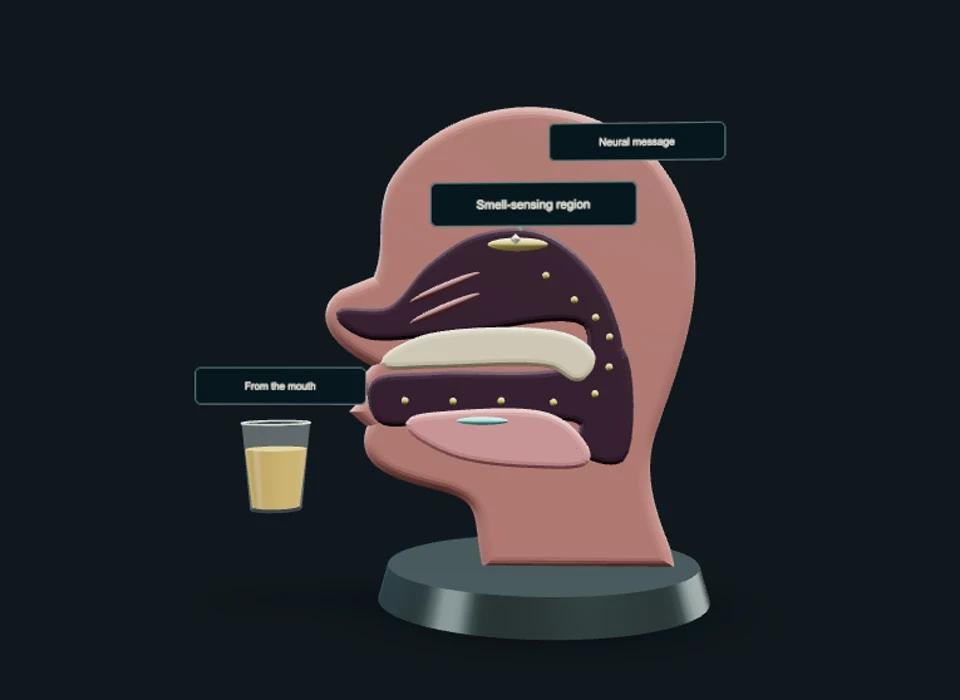
Interactive explorationWhy does food seem different when your nose is blocked?
Find the hidden route from mouth to nose. Keep a virtual sample the same, change which messages can get through, and inspect real nasal images and an odor receptor.
Follow touch, light and vibration into the body. Separate the physical signal from the work of sensing and perception.
Interactive explorationFind the hidden route from mouth to nose. Keep a virtual sample the same, change which messages can get through, and inspect real nasal images and an odor receptor.
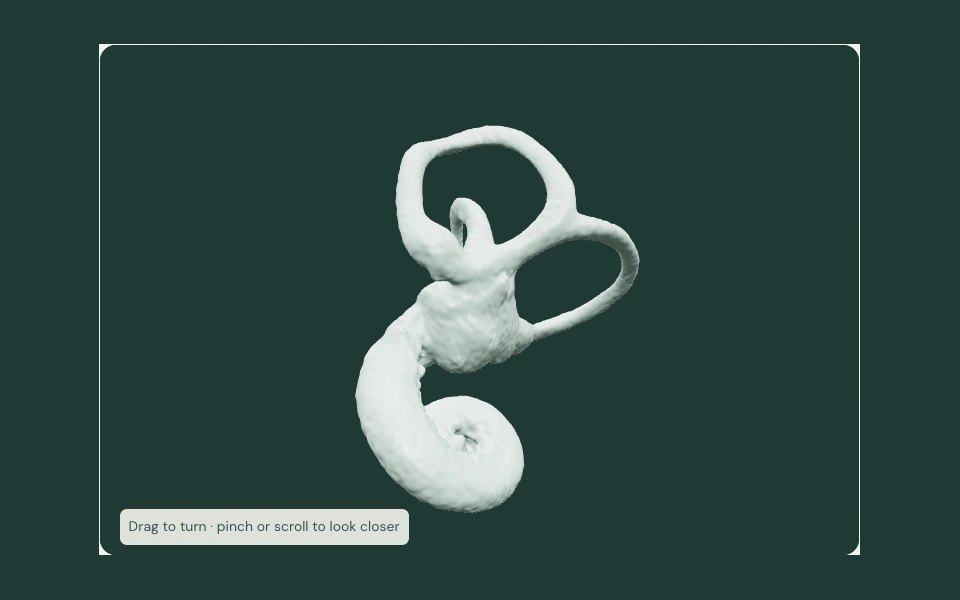
Interactive explorationBrake a virtual chair, open a real inner-ear reconstruction, and solve a motion-clue puzzle. Discover why actual movement, sensory responses and what you feel are different.
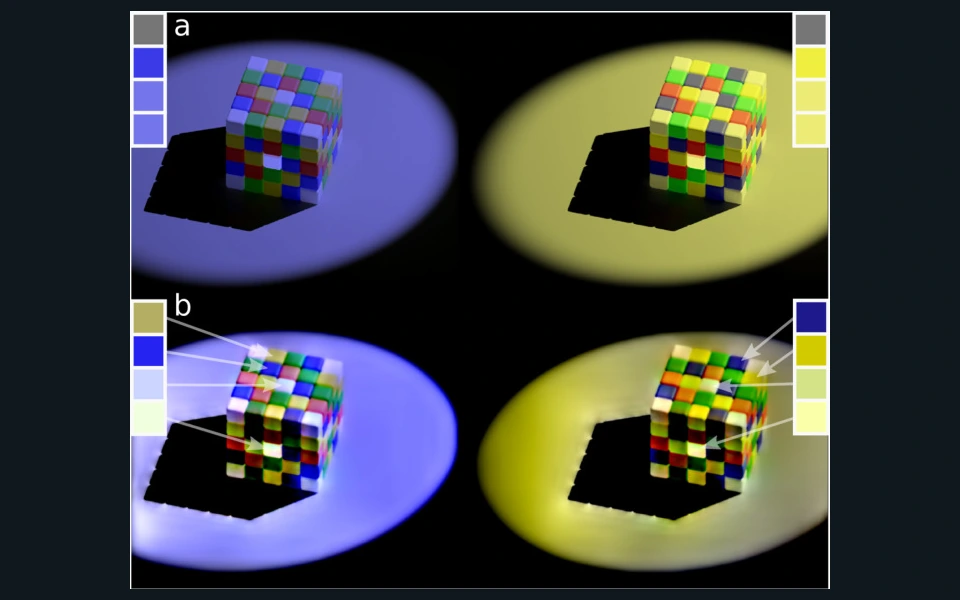
Interactive explorationBecome a color detective. Move the surroundings, uncover the samples, and inspect the actual pixels. Then put a simple explanation to a harder test.
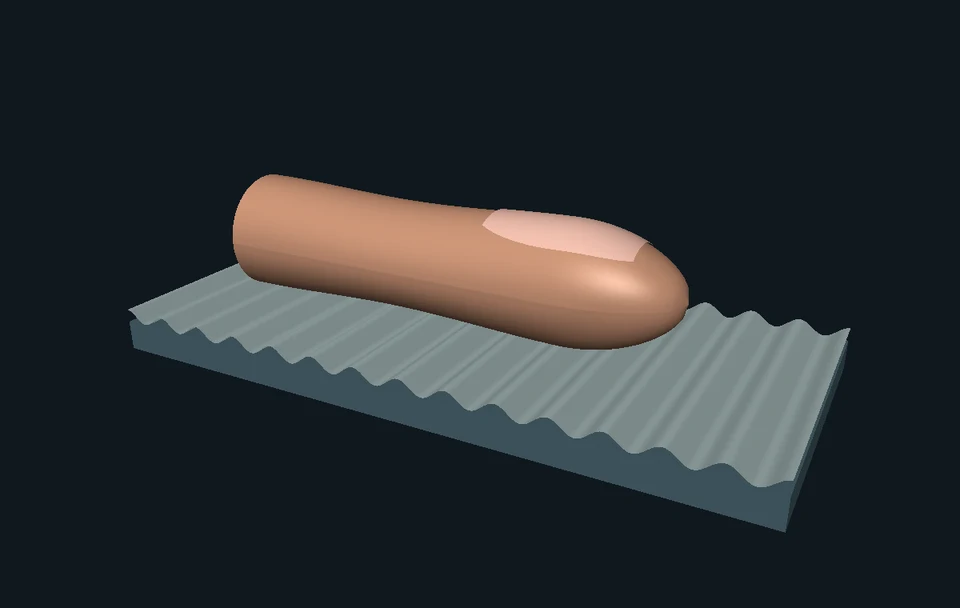
Interactive explorationSlide a texture beneath a finger. See the contact change, compare a moving touch with a steady one, and zoom from skin to a real sensing protein. Discover how touch differs from pain.
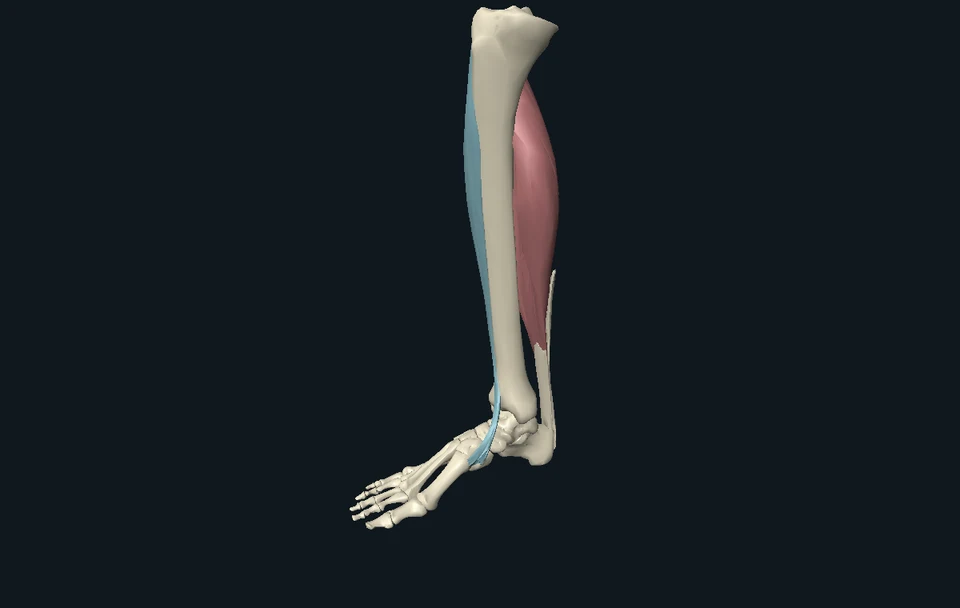
Interactive explorationTip a virtual platform under a real 3D ankle. Discover why one muscle gets more drive while its partner gets less, follow the spinal circuit, and change one connection to see the difference.
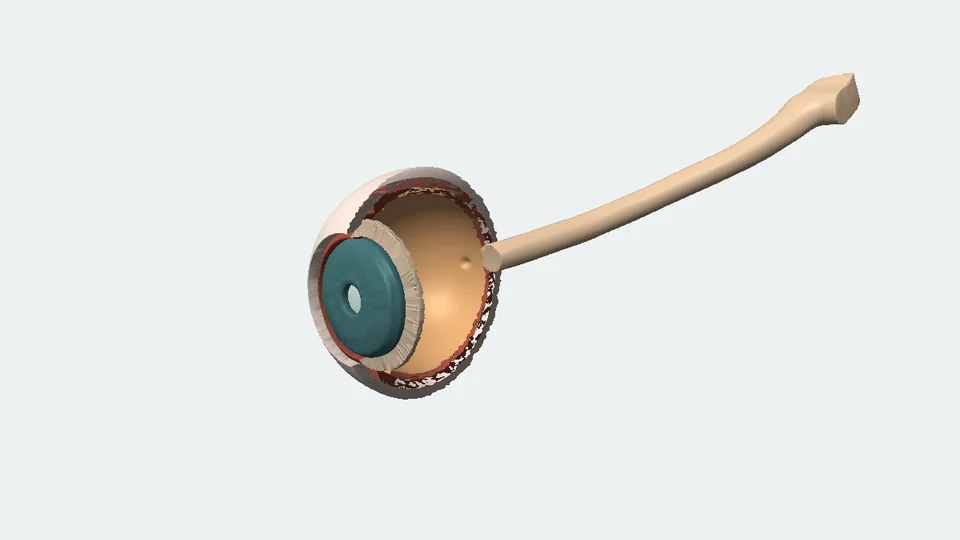
Interactive explorationOpen a sourced 3D eye, move a target nearer, and catch the moment its light comes together. Then discover why a smaller pupil is different from better focus.
Interactive explorationStart with a vibration. Follow air, eardrum, tiny bones and hair cells, then see why the message reaching your brain is a different kind of signal.
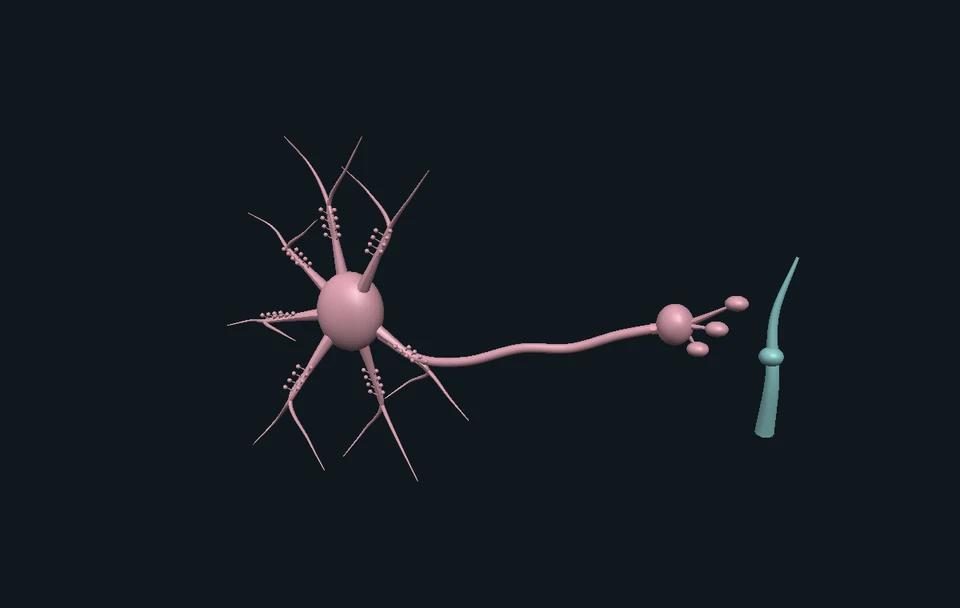
Interactive explorationNudge a membrane, discover when a spike appears, test its recovery, and cross a chemical synapse. Then inspect a real potassium-channel structure.
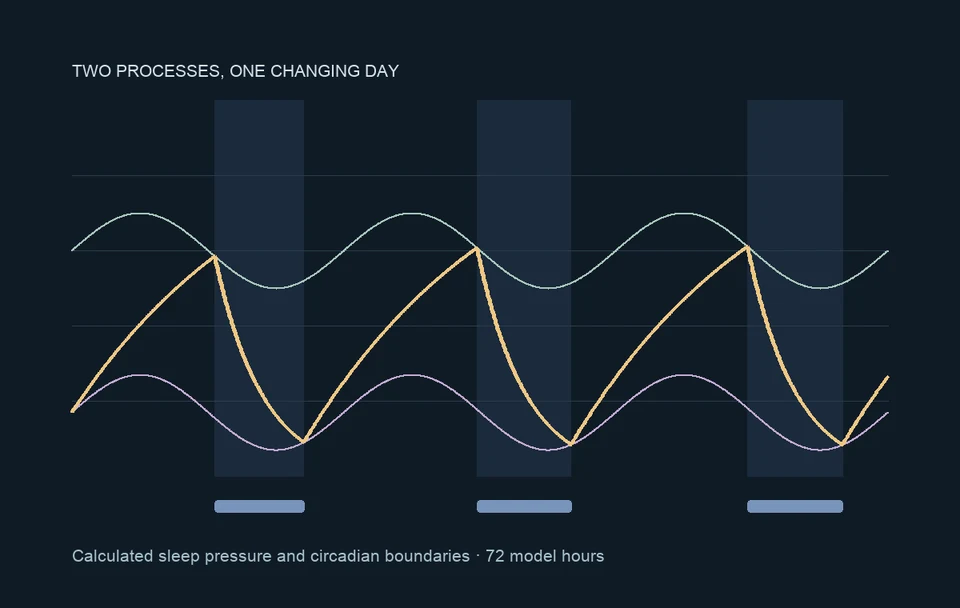
Interactive explorationChange a fictional sleep history, catch the moment two curves meet, and separate a local clock change from a biological clock. Then follow light information from eye to brain.
Slide an object toward a lens. Follow the rays, find a sharp image, and discover the moment a camera becomes a magnifier.
Take these steps at your own pace. Your place is not saved as account progress or scored.