An experience comes first
Encoding refers to forming information from an experience. The tray activity shows pictures with context labels. Four is a friendly starting set chosen for this interface, not a claim about anyone’s memory capacity.
Explore real picture cards, try remembering with and without clues, and compare recognition with context. Keep a private record, inspect published learning results and plan a review.
Enable JavaScript to change the conditions and run the interactive experiment.
Remembering depends partly on the question and the help available. Naming something without choices, recognizing a picture, and remembering where it appeared are different tasks. A preserved record lets you examine the difference without guessing what happened inside a brain.
Is recognizing a displayed picture the same task as naming it with no choices?
The task and available cues differ; neither directly measures a unique internal process.
Encoding refers to forming information from an experience. The tray activity shows pictures with context labels. Four is a friendly starting set chosen for this interface, not a claim about anyone’s memory capacity.
With the pictures hidden, you try naming what you saw. No candidate list is supplied. A blank answer can reflect many things, including the task, wording or available help; it is not a direct measurement of whether a perfect hidden copy exists.
Returning the empty tray labels supplies context without revealing the pictures. New answers are saved separately from the first attempt. Some cues help under some conditions; the activity does not require a cue benefit to count as useful.
A displayed picture offers information absent during free recall. You decide whether it appeared in this round, did not, or leaves you unsure. A familiar feeling can come from another encounter, and recognition can also involve remembered detail.
Recognizing a picture and remembering its tray are separate questions. A correct item answer can coexist with a mistaken context answer. The original choice stays in the record instead of being erased by the second answer.
A definite “shown” judgment for a new item is called a false alarm. A missed old item is a miss. These names describe responses in a task; they do not establish dishonesty, low intelligence or a health condition.
In a published prose-learning experiment, extra study had the higher mean after five minutes, while initial retrieval had higher means after two days and a week. Immediate ease is not a substitute for evidence from a delayed test.
Moving a review changes the learning-to-review gap. If a final check stays on the same date, its delay after review changes too. The date planner exposes both intervals; it does not predict a personal retention percentage.
Free recall, cued recall and recognition are operational task definitions. Their outcomes can involve studied information, associations, decision criteria, guesses and task history. An observed difference does not uniquely identify one internal process.
Tulving and Pearlstone’s 1966 study used categorized word lists and category-name cues. Recall depended on the cue and organization. Our neutral tray context differs from their category manipulation; no effect size or hidden-memory guarantee is transferred to this activity.
Research separates old/new judgments, remembered detail, familiar feelings and source questions in different ways. Such measures and latent-process estimates rely on assumptions. This lesson records choices and context answers without estimating how much recollection or familiarity someone has.
The same items move from study to recall, context cues, recognition and source questions. Earlier attempts, candidate exposure, time and order all change. This is an explanatory sequence, not a randomized efficacy trial of learning methods.
“Not sure” is not silently converted into “new.” Unanswered trials are omitted, not guessed. In a balanced four-old/four-new set, calling everything old gives four hits and four false alarms. Looking only at hits would conceal the errors.
The context question follows every “old” answer, including false alarms. A definite correct tray answer for a recognized old item differs from an item-recognition hit. Source uncertainty and omissions remain visible; no eight-item percentage is presented as a psychological measurement.
The photographic-stimulus studies measured variation in naming, familiarity and other properties in adults. An exact word match can confuse vocabulary or spelling with remembering. The local matcher handles a small declared set of alternatives, flags duplicates and leaves other descriptions for self-checking.
Roediger and Karpicke’s 2006 Experiment 1 enrolled 120 undergraduates aged 18–24. Participants learned prose passages scored in 30 idea units. Learning condition was within participants; final delay was between participants. The initial retrieval tests had no feedback. The visible percentages are published group means, not each person’s result.
Karpicke and colleagues’ 2014 elementary-school experiments examined retrieval activities with children aged 9–11. Difficulty with unsupported recall motivated guided activities. The findings support attention to task design and help; they do not validate this specific four-card interface or a universal amount of guidance.
Cepeda and colleagues varied study-to-review gaps and later test delays in an adult trivia-learning study across days and months. Best tested gaps differed from fitted or interpolated optima. The lesson therefore uses a date worksheet, not a model-generated forgetting curve or an optimal schedule for the visitor.
Cadavid and Beato’s 2016 study reported mean “old” responses of 65.30% for studied words, 39.31% for related unstudied lures and 11.14% for unrelated new items. The source used Spanish word lists and undergraduate participants. Those three condition means are not parts of one total or a forecast for this photo task.
The activity records which readable cards were presented, their phase and visible page intervals after loading. Visibility is not attention or mental effort. Context labels and candidate displays change available information. A repeat within the page is labeled; earlier encounters elsewhere cannot be reconstructed by this local task.
Explaining a lesson with it closed asks something different from looking at the open page. Check the explanation afterward and use gaps to guide further study.
Knowing that a claim sounds familiar is different from recalling its source. Keep notes and source links so the record can be checked.
Ask who participated, what task they did, what help they received and how long the final test was delayed. A promising group result is not a guarantee for every learner.
Use the helper’s twelve neutral word cards. Familiar alternatives in an agreed language are fine; record substitutions. The learner should not inspect all candidates first when the intended task asks new versus studied.
The helper selects six, assigns three to SUN and three to MOON, and records the exact assignments on a covered sheet. The other six remain hidden.
Reveal each chosen word with its pocket label. Use a consistent self-paced rule and cover it again. Let the learner say the name; no race or memory-health score is needed.
Without displaying choices, write or say a first list. Preserve it. Then show only the empty labeled pockets and keep any additions on a second list.
Shuffle all twelve. Mark shown, not shown or unsure. For each endorsed word, ask SUN, MOON or unsure. Keep answers before consulting the original.
Check item and source choices separately. Name at least two changed conditions. If no mistake occurs, a clearly invented response can demonstrate how a mistaken item or context would be recorded.
Choose a small nonpersonal learning topic. Plan to explain it with the page closed, check the source, and revisit it on a chosen date. Keep the dates without declaring a winning method from one exercise.
What changed between recall, a context clue and recognition?
Use neutral everyday words. No distressing personal memories, sleep restriction, spinning, sensory deprivation or speed competition. Fold and tear cards, or ask an adult to cut. A repeat changes familiarity; it is not a new naive trial.
The two tasks supplied different help. Recognition supplied candidate information unavailable during free recall.
Check the feeling against evidence about this round. Familiarity can arise outside the current episode.
The item answer was correct; its context answer was not. Item recognition and source judgments are separate observations.
No: this cue helped under these conditions. A helped retrieval supports a bounded conclusion.
Retrieval’s mean was 56%, versus 42% for restudy. Read the actual delayed result and distinguish a group mean from individual outcomes.
Both the gap before review and the delay afterward. The intervals change from 2/7 days to 7/2 days.
No: task, order, cues and previous retrieval changed. The sequence is useful for observing task differences, but does not isolate a method’s efficacy.
What happened with these items and conditions, with options for help. The activity is not validated for clinical or intelligence interpretation.
Original publisher abstract checked. No numerical figure or universal effect size is copied. Tray-context cues differ from the study’s category-name cues.
Tulving & Pearlstone (1966) · retrieval cuesOriginal old/new, Remember/Familiar and source tasks. Their latent-process estimates are not turned into a personal product metric. The 2022 correction concerned funding.
Lawrence & Chai (2021) · recognition and sourceTable 1 provides condition means and participant SDs in 89 Spanish-speaking undergraduates. No ERP truth detector or individual picture-task prediction is inferred.
Cadavid & Beato (2016) · related luresExperiment 1 values are explicitly reported on page 251. Original newly drawn charts show the factual six percentages; the publisher’s figure and prose passages are not redistributed.
Roediger & Karpicke (2006) · delayed retentionThree classroom experiments with children aged 9–11. Their actual results motivate care in applying adult evidence; this interface has not undergone those trials.
Karpicke et al. (2014) · guided retrieval in childrenOriginal adult trivia-learning study with actual day/month delays. Tested, interpolated and fitted optima differ. The local planner performs date arithmetic only.
Cepeda et al. (2008) · spacing and retention delaySelected Figure 2 crops. The source states Creative Commons Attribution without a version number; that notice is preserved rather than relabeled. Adult norms do not validate a child memory score.
Brodeur et al. (2010) · BOSS object photographsSelected Figure 1 crops, CC BY 4.0, with original TIFF, exact crop operations and derivative hashes. No full-database item norms or author endorsement are implied.
Brodeur, Guérard & Bouras (2014) · BOSS Phase IIIndependent subject review is pending.
Read the sources and model assumptions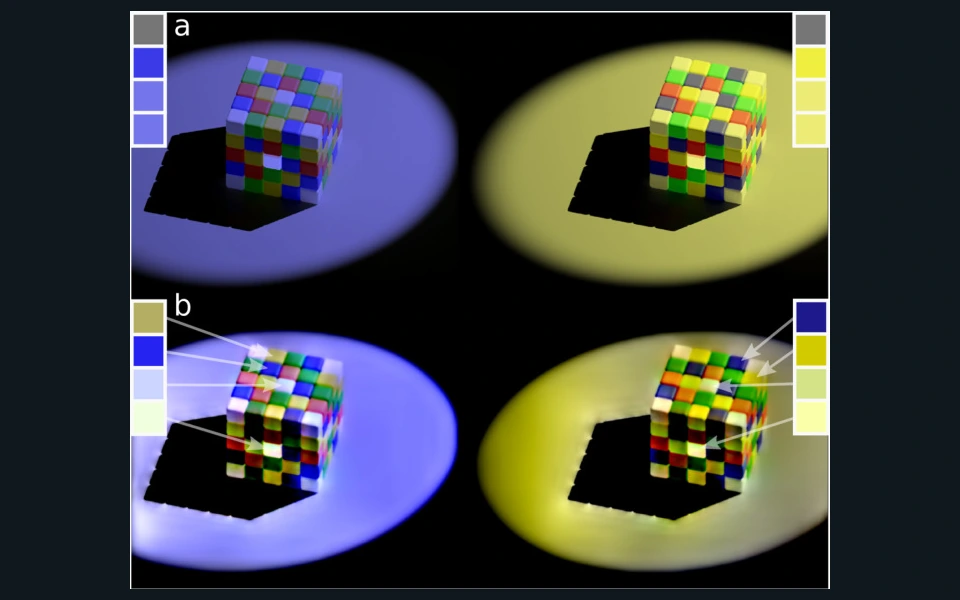 Interactive exploration
Become a color detective. Move the surroundings, uncover the samples, and inspect the actual pixels. Then put a simple explanation to a harder test.
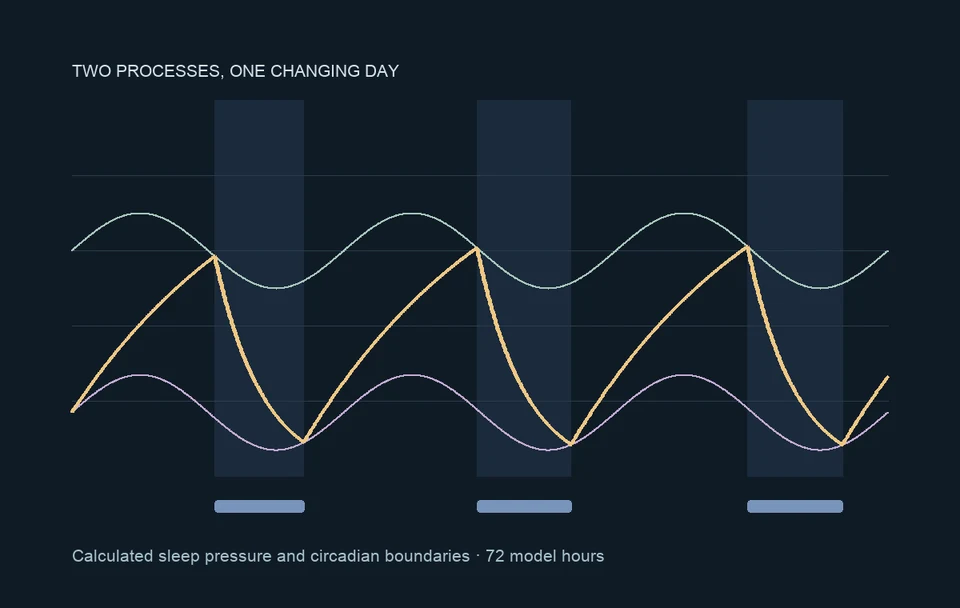 Interactive exploration
Change a fictional sleep history, catch the moment two curves meet, and separate a local clock change from a biological clock. Then follow light information from eye to brain.
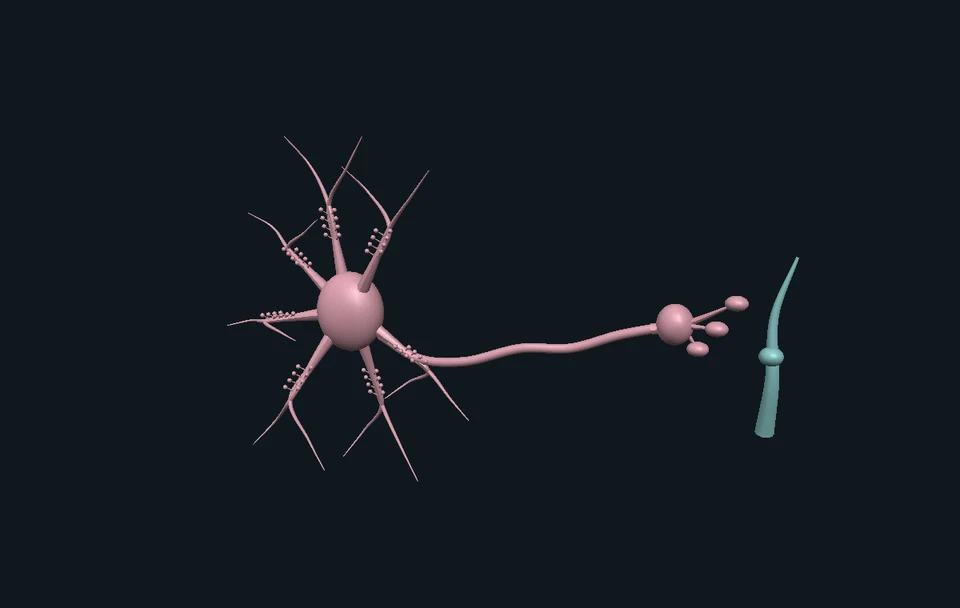 Interactive exploration
Nudge a membrane, discover when a spike appears, test its recovery, and cross a chemical synapse. Then inspect a real potassium-channel structure.