Make a record as rock forms
The ridge model adds rock at the center and moves it outward symmetrically. A parcel keeps the magnetic-polarity label assigned when it formed. The current field does not repaint all the older rock.
Pull a ridge apart over millions of years. Read the age and magnetic pattern left behind, then compare spreading, sliding and subduction.
Enable JavaScript to change the conditions and run the interactive experiment.
At a spreading ridge, new crust forms near the axis while older rock moves away. Rock age and recorded magnetic polarity leave patterns that help scientists reconstruct motion.
At 3 cm/year per side, how far apart are two matching parcels after one million years?
Each parcel travels 30 km from the ridge in opposite directions. Their separation is 60 km.
The ridge model adds rock at the center and moves it outward symmetrically. A parcel keeps the magnetic-polarity label assigned when it formed. The current field does not repaint all the older rock.
A longer interval of one polarity makes a wider band at a fixed spreading rate. A faster rate also makes wider bands for the same time interval. Real reversal intervals are unequal; our two schedules are hypothetical examples.
Divergent boundaries separate. Transform boundaries slide past one another. At selected convergent boundaries an oceanic plate can descend beneath another. These describe relative motion; they are not a calculated cause of it.
A half-spreading rate of 3 cm/year moves one side 30 km in one million years. The matching pair is 60 km apart. The slider is a half-rate, not the total separation rate.
Rock can preserve a magnetic record, while measured magnetic anomalies depend on geometry and magnetization. The colored strips are an ideal record, not a measured anomaly profile or a map of colored seafloor.
Earth’s plates include oceanic and continental lithosphere. Much of the mantle is solid yet deforms over geological timescales. This kinematic model prescribes plate motion; it does not solve mantle flow, rock fracture, magma generation or earthquake prediction.
Feed paired strips through the central slot and fold them outward in opposite directions. Hands supply the motion underneath.
Pull equal distances for each pretend time step. Change marker color after unequal numbers of steps. Mark both sides at the ridge.
Cover one side and predict its pattern. Repeat with a faster pull but the same time schedule. Wider bands can reflect a faster rate.
Can you infer the opposite side’s pattern before revealing it?
A kinematic analogy, not a model of mantle forces, heat or earthquakes. An adult prepares slots; no learner blade work is needed.
This Dynamic Earth is a historical agency synthesis; used here for boundary classification and kinematics.
USGS · Plate motionsAgency evidence account. Our stripes are hypothetical and are not copied measured profiles.
USGS · Magnetic stripes and clocksJohn C. Lahr’s original activity. Its simplified force/melting descriptions are not imported.
USGS · Paper spreading modelIndependent subject review is pending.
Read the sources and model assumptions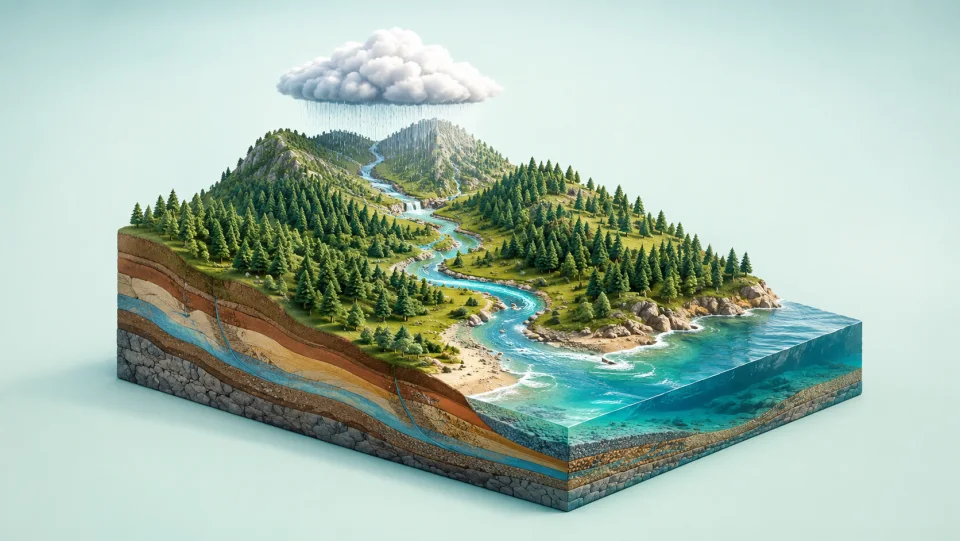 Interactive exploration
Follow water above and below the surface. Pave part of the land, change evaporation, and watch the water budget rearrange.
 Interactive exploration
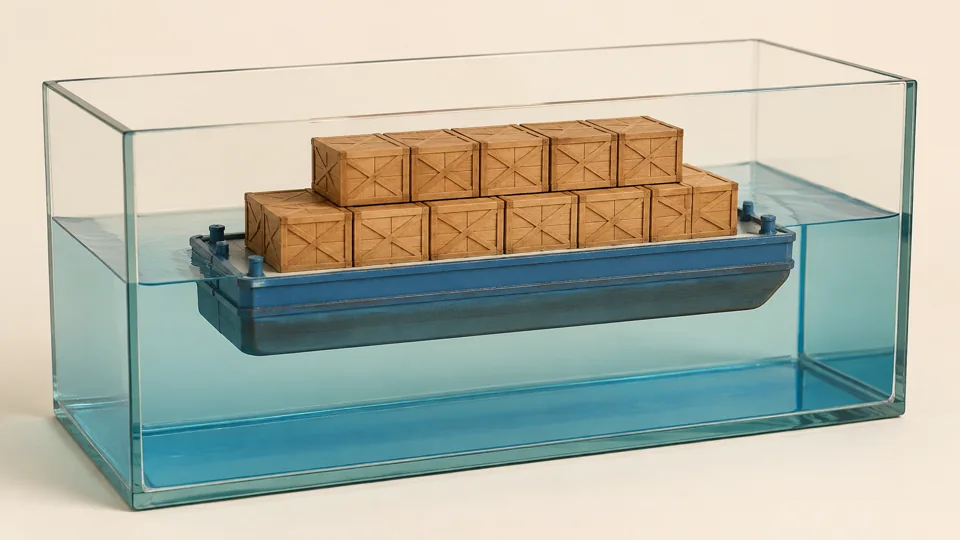
Load a tiny barge and watch its waterline rise along the hull. Then lower a block through a tank to connect water pressure with buoyancy.
 Interactive exploration
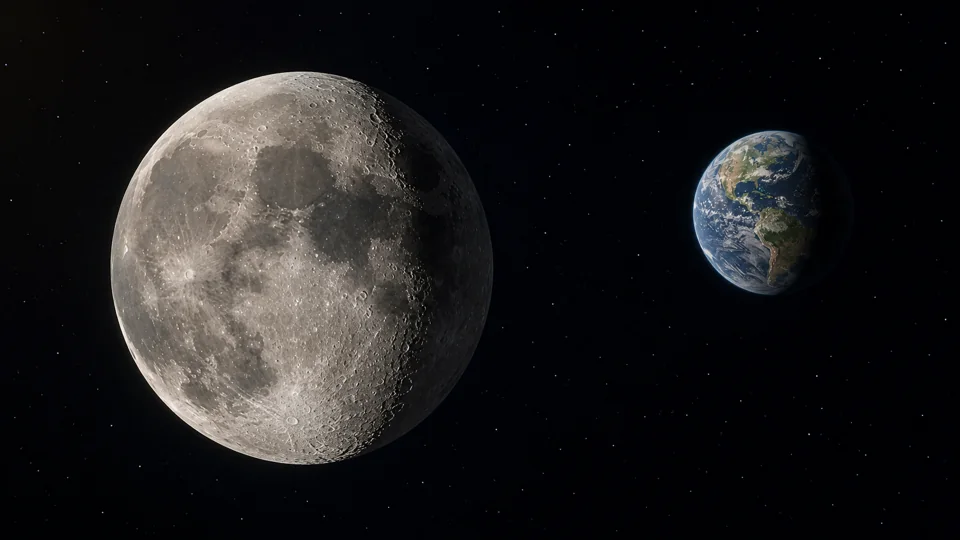
Move the Moon around Earth and compare two viewpoints at once. Make a crescent, then tilt the orbit to discover why an eclipse is a special alignment.