Start in a leaf
Carbon dioxide enters through pores called stomata, and water arrives through the plant’s transport tissues. Photosynthesis occurs in chloroplasts. The leaf view and chloroplast view represent different scales.
Open a leaf, explore a chloroplast, and supply a tiny carbon-building recipe. Discover what comes from air, what comes from water, and what light contributes.
Enable JavaScript to change the conditions and run the interactive experiment.
Light supplies energy. Carbon dioxide supplies carbon for new carbohydrate. The oxygen gas released by oxygenic photosynthesis comes from water. These are different roles, even though all three appear in the same overall story.
Which input provides the carbon in the new three-carbon product?
The three added carbon atoms arrive in three CO₂ molecules. Light supplies energy through chemical carriers; it supplies no carbon atoms.
Carbon dioxide enters through pores called stomata, and water arrives through the plant’s transport tissues. Photosynthesis occurs in chloroplasts. The leaf view and chloroplast view represent different scales.
Chlorophyll and other components in thylakoid membranes participate in light-dependent reactions. Water is oxidized and oxygen gas can be released. ATP and NADPH connect light-dependent reactions to carbon-building chemistry.
In the stroma, Calvin–Benson reactions fix carbon dioxide. A net three-carbon G3P product can leave while the starting RuBP carbon pool is regenerated. Glucose is not the direct output of one turn of the cycle.
For one net G3P accounting batch, supply 3 CO₂, 9 ATP and 6 NADPH. The existing three-RuBP pool contains 15 carbons. Adding three carbons gives 18; exporting a three-carbon product leaves 15 to regenerate the pool.
Turning off light in the context view stops its replenishment cue. The recipe bench has separately supplied carrier stocks, which remain available without light. Light is not converted into carbon atoms, and existing products do not disappear in darkness.
Without CO₂ there is no new carbon export; without sufficient carriers a complete batch cannot finish. The six-second animation is an explanation sequence, not a reaction time or a prediction of plant growth. Plants also respire.
Arrange 15 carbon counters as three groups of five. Label these groups RuBP. Put three incoming CO₂ carbon counters beside them.
Combine the 18 counters into six groups of three. This tracks carbon only, not every atom or intermediate reaction.
Move one three-counter group out as net G3P. Rearrange the other 15 into three groups of five. Explain why energy carriers are also needed.
Can you export something new without losing the starting pool?
An exact carbon-accounting analogy, not an experiment on a living leaf. Paper circles replace loose counters for young children. A plant journal can supplement it but cannot establish carbon origin by itself.
How Light-Dependent Reactions Work and figure 8.17 establish the water/O₂ distinction and carrier roles.
OpenStax · Light-dependent reactionsCalvin-cycle stages and figure 8.19 support carbon accounting.
OpenStax · Carbon fixationFurther optional activity reference. The simple paper activity below does not measure photosynthesis.
Exploratorium · Leaf investigationIndependent subject review is pending.
Read the sources and model assumptions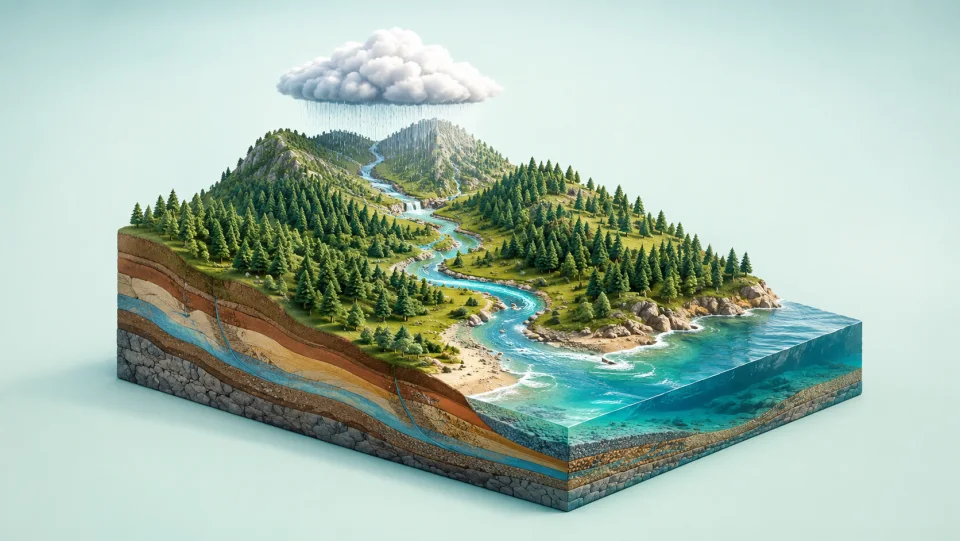 Interactive exploration
Follow water above and below the surface. Pave part of the land, change evaporation, and watch the water budget rearrange.
 Interactive exploration
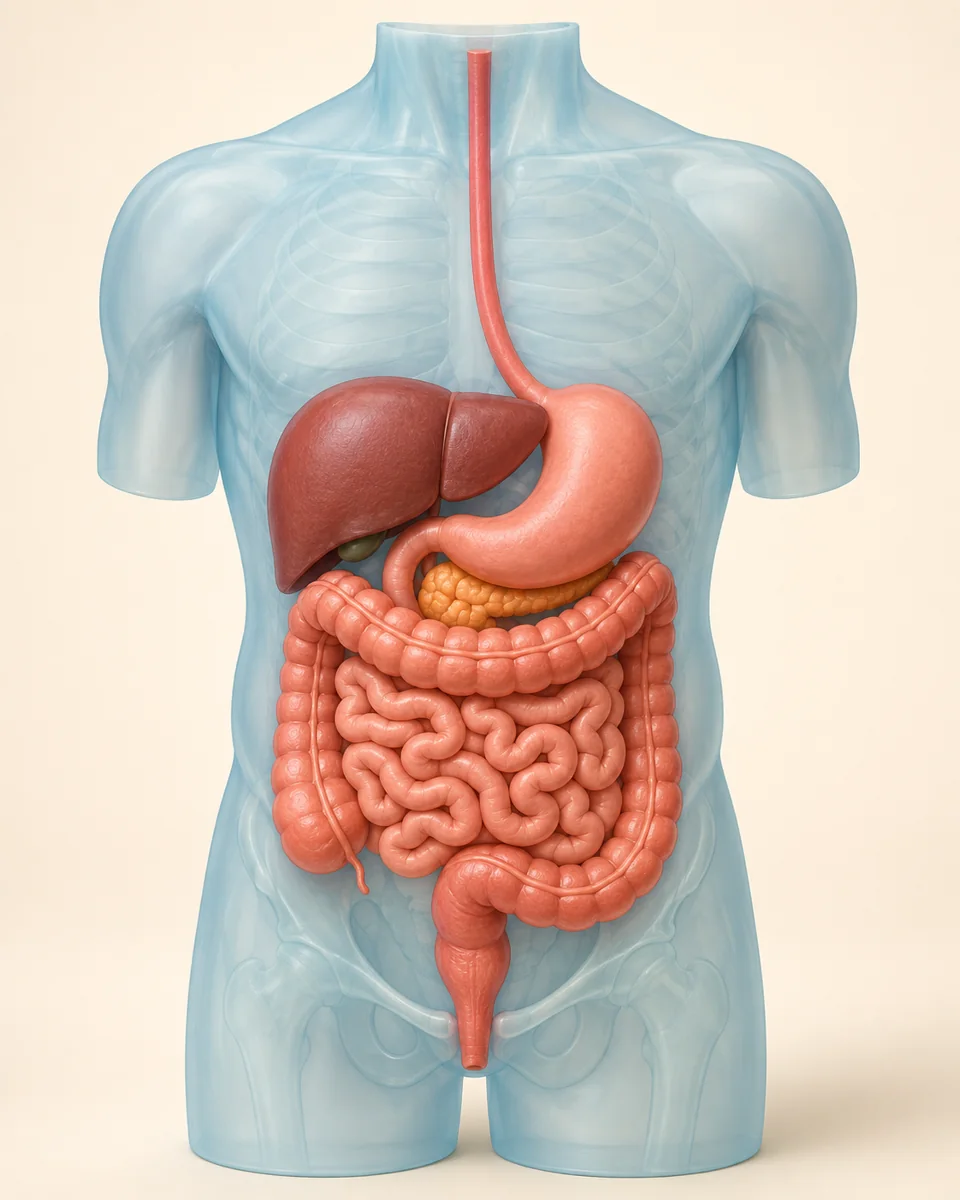
Follow a meal through the gut, then zoom into its lining. Choose starch, protein or long-chain fat and discover why their next routes differ.
 Interactive exploration
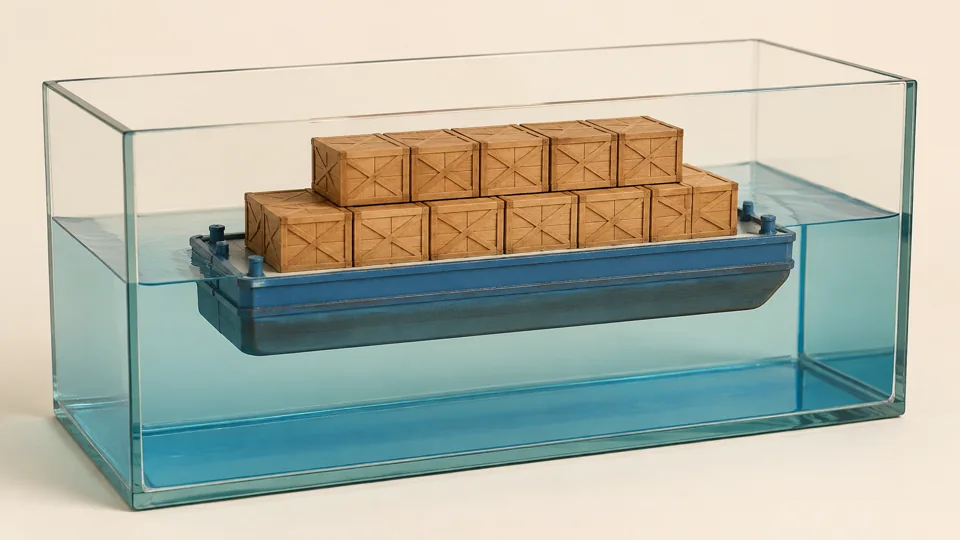
Load a tiny barge and watch its waterline rise along the hull. Then lower a block through a tank to connect water pressure with buoyancy.