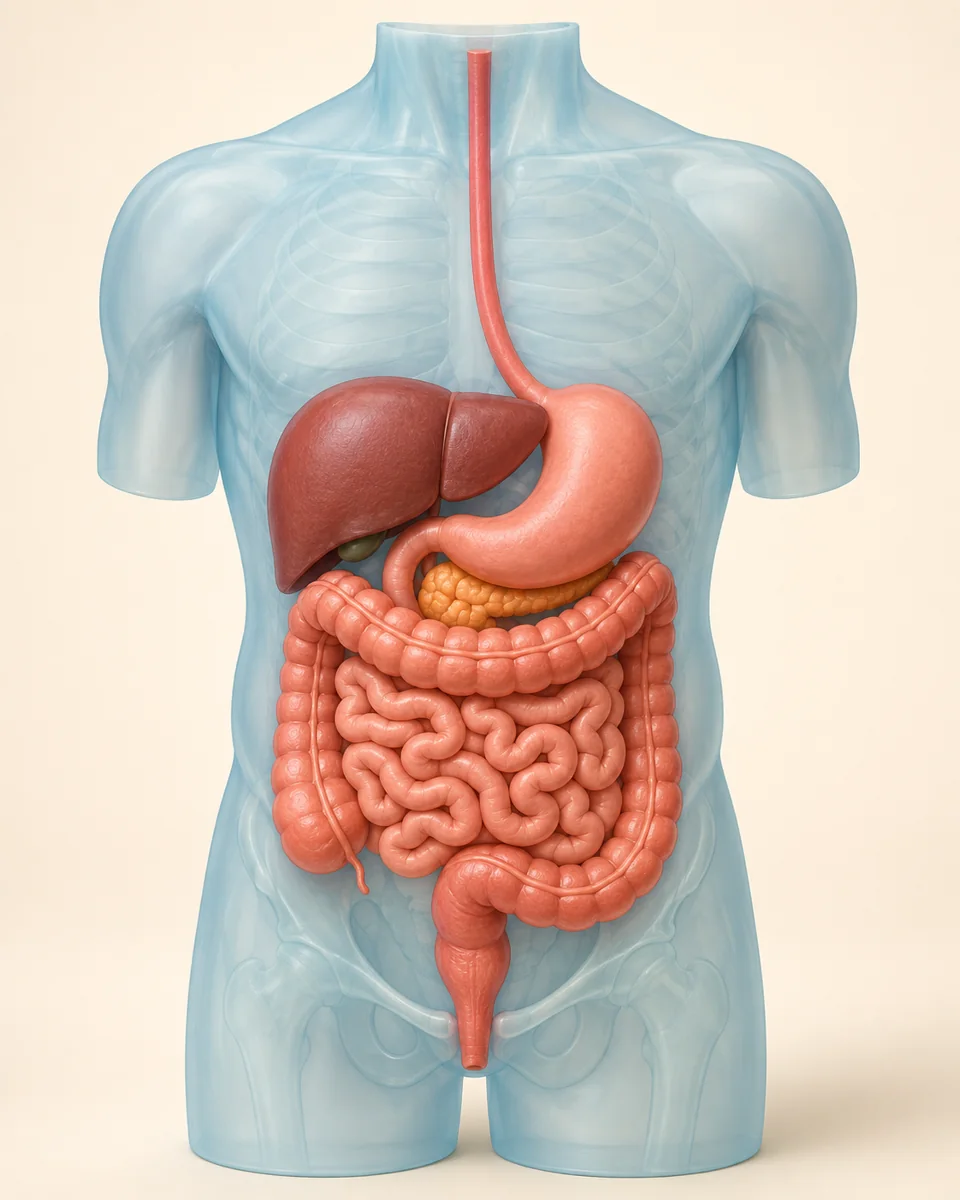
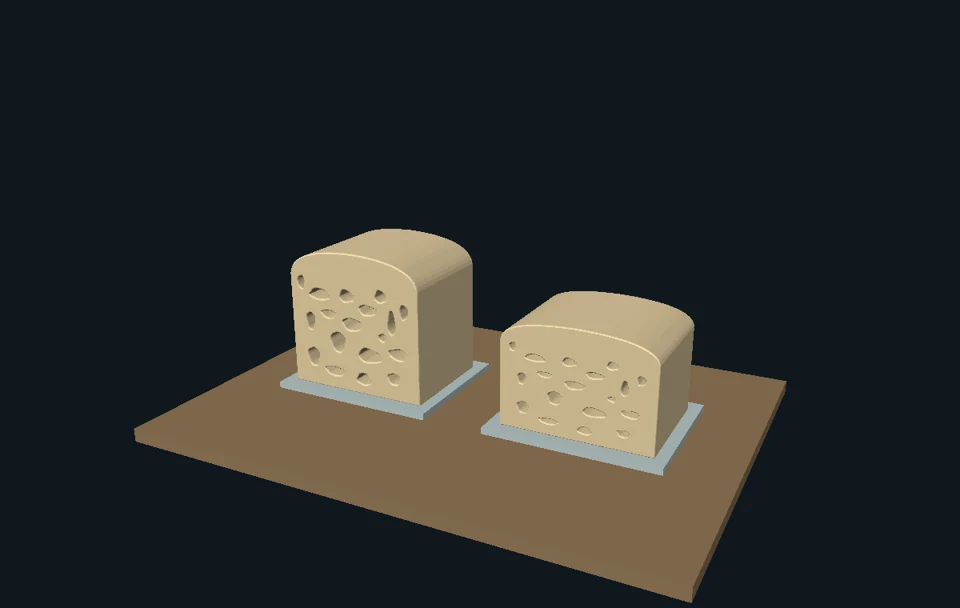
INTERACTIVE EXPLANATIONWhat happens to the food your own enzymes cannot digest?
Match two kinds of fiber to the microbes that can use them. Look through a bacterial surface, inspect a real enzyme holding a sugar chain, and sort the different kinds of products that microbes can make.
Enable JavaScript to change the conditions and run the interactive experiment.
Make a discovery
Your own digestive enzymes and microbial enzymes are different tool kits. Even two chains built from fructose can need different machinery because their pieces connect differently. Access, cutting and use are separate questions.
- Distinguish human digestion from selected microbial transformations in the colon.
- Identify why a linkage matters even when the sugar building blocks match.
- Use an experimental outcome without extending it to every strain or person.
- Separate binding, transport, cleavage and whole-cell utilization.
- Explain one hydrolysis while keeping every sugar residue accounted for.
- Distinguish representative organic products from gas.
- Recognize that food-label fiber grams do not predict a personal microbial response.
Make a prediction
Two chains contain fructose pieces. Must one microbe be able to use both?
- Yes, because the pieces match
- No; their connections and the microbe’s tools matter
- Only the picture’s color matters
Read the explanation
Compare the two source-defined strains and both linkage types. The same sugar identity does not establish the same access or cleavage pathway.
Understand it
Some material reaches different tools
An ileostomy experiment found that inulin and oligofructose resisted small-intestinal digestion. Particular microbes can access some material that a person’s own enzymes cannot. This does not mean every fiber always arrives unchanged.
The pieces do not tell the whole story
Inulin-type and levan-type fructans contain fructose residues with different characteristic linkages. Real foods are mixtures; the displayed short segments are teaching examples, not a whole food or its complete ingredient profile.
A species name is not a complete tool list
Two Bacteroides thetaiotaomicron strains had different fructan-use profiles in the cited culture experiments. A and B mean two selected strains, not good and bad microbes.
Getting in and cutting differ
The studied inulin route brings substrate across the outer membrane into the periplasm before cleavage. The reference levan route cuts material at the surface before importing shorter pieces. A generic “everything is cut outside” picture would miss this difference.
Binding can be held still for inspection
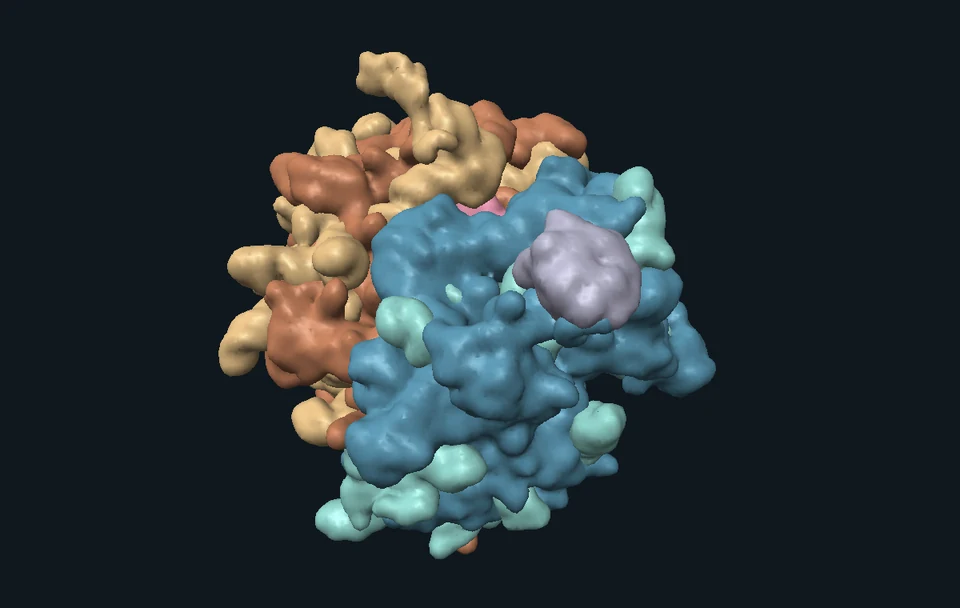
Researchers altered a catalytic site in BT1760. The resulting E221A specimen holds a four-fructose levan fragment with strongly reduced cutting activity. Its experimental structure reveals binding, not a filmed digestion event.
Products take more than one route
Microbial transformations can produce dissolved organic molecules and gases, with pathways and communities affecting which ones occur. Some products are used by other microbes; some are absorbed and transformed by the host. These are different fates, not one fixed recipe.
Look closer at the science
Fructose, fructans and glycosidic links
A fructan is a chain containing fructosyl residues. The selected inulin and levan examples distinguish β(2→1) and β(2→6) linkages. Natural inulin commonly has a terminal glucose and distributed chain lengths. The segment symbols omit terminal details; the actual levantetraose structure has four fructose residues.
Periplasm is a real compartment
In this Gram-negative bacterial example, the periplasm lies between outer and inner membranes. The gap and importer in the reconstruction are enlarged and simplified. They are not measured protein dimensions or an animation of a whole chain crossing in real time.
A source-defined change separates requirements
A transferred SusC/D pair enabled inulin use in the studied recipient. Removing all three relevant native exo-GH32 genes removed that use. Access and required cleavage machinery must be considered together; the lesson does not extrapolate untested combinations.
Hydrolysis conserves matter
Four free fructose molecules minus three waters gives the linear tetramer formula C₂₄H₄₂O₂₁. One bond hydrolysis adds H₂O while splitting one connected chain into two. Together the fragments contain C₂₄H₄₄O₂₂. This accounting does not specify the endo-enzyme’s actual product distribution.
Binding is not catalysis
PDB 6R3U is a 1.90 Å X-ray coordinate model of an E221A laboratory mutant. One protein monomer and four linked FRU residues are retained. Protein envelopes, atom display radii and colors are authored; 495 deposited alpha-carbon positions support a backbone trace, with breaks across missing sequence positions.
Cross-feeding depends on the case
In a separate tested system, B. ovatus released inulin-derived products that supported B. vulgatus ATCC 8482. A recipient’s response did not establish that it cut the original polymer. This is conditional metabolism, not conscious sharing or universal cooperation.
SCFA names and chemical form
Acetate, propionate and butyrate have two, three and four carbons. The displayed anions are C₂H₃O₂⁻, C₃H₅O₂⁻ and C₄H₇O₂⁻. Their simplified connectivity models omit hydrogens, detailed geometry and bond-order/resonance depiction. The lesson does not calculate a universal production ratio.
Absorption is different from unchanged systemic availability
In a tracer experiment in 12 adults, means ± SD for unchanged systemic availability after colon delivery were 36 ± 21% for acetate, 9.2 ± 5.9% for propionate and 2.4 ± 1.9% for butyrate. Tissue and liver use matter. These are not fiber-to-product yields, total absorption percentages, or everyone’s expected values.
An assay answers its own question
Experimental substrate contact, reporter activity, metabolic activity and polymer degradation are distinct measurements. In the microscopy view, assigned fluorescence colors label bacteria and synthetic particles; they do not show natural gut colors or directly measure how much fiber disappeared.
People and communities vary
A three-prebiotic crossover study was completed by 28 adults and found differences in response. Its short interventions and particular measurements do not supply a personalized food recommendation. The label activity observes packaging, not anyone’s gut.
Where this is used
Read a food label with better questions
Record the stated amount and ingredient names. “Not specified” is a useful answer when a particular fiber’s identity is missing.
Design an experiment that separates steps
Measure binding, transport, cleavage or utilization deliberately. A positive result for one is not automatically a positive result for all.
Understand communities without a good/bad scoreboard
A molecule released by one organism can become another’s substrate. The source and conditions determine which relationship is supported.
Try it yourself: Become an invisible-link detective
Supplies
- Two sheets of paper and a pencil
- Two colors for connector labels
- Six folded or torn paper connector strips
- Optional printable lesson sheet
- Two clean food packages already available; no purchase needed
- Make eight matching pieces
Draw two sets of four circles marked F. Each is a symbol for a fructose residue, not one atom. Add positions 1, 2 and 6 to the legend.
- Change only the links
Connect one set with three 2→1 strips and the other with three 2→6 strips. Add the β symbol from the legend. Keep the pieces and chain lengths the same.
- Make a prediction first
Before opening the result cards, write whether the two chains should be equally accessible to one microbe, and why.
- Reveal the tested pairings
Use the source matrix in the learning pack. Match A and B to the chain each used. Same species and same sugar pieces did not guarantee the same tested ability.
- Account for one removed link
On a separate four-piece chain, remove one connector and add an H₂O card. Count residues, remaining links and fragments before and after. This models hydrolysis, not a home enzyme experiment.
- Inspect two existing labels
Record serving size, fiber per serving and whether an ingredient names inulin or a fructan. If it does not, write “not specified.” A source name is a clue, not a complete molecular assay.
- Separate observation from inference
Finish two sentences: “I observed…” and “This cannot tell me…” Your labels cannot tell you which personal microbes will use the food or how much gas someone will produce.
Do the same pieces guarantee that the same tool will work?
Use paper and existing labels. No tasting, food preparation, microbial culturing or body samples. Scissors are optional with adult help. Label observations do not measure your microbiome or prescribe a diet.
Check your understanding
Your own enzymes cannot cut a certain fiber. Must it leave the body entirely unchanged?
- Yes
- No; particular microbes may transform some of it
- Every microbe will completely digest it
Answer and explanation
No; particular microbes may transform some of it Host and microbial capabilities differ, while substrate and community still matter.
Two chains contain fructose. What else helps choose a molecular tool?
- How their residues connect
- The colors used in the picture
- The package’s size
Answer and explanation
How their residues connect The selected fructans distinguish β(2→1) and β(2→6) links.
Two bacteria share a species name. Must they use the same fiber?
- Yes
- No; the tested strains can differ
- Only if both look blue
Answer and explanation
No; the tested strains can differ The A/B source matrix shows different fructan-use profiles within one species.
The chain fits into the displayed E221A structure. What have we demonstrated?
- Normal-rate cutting
- Binding in an experimental structure
- A benefit to the person viewing it
Answer and explanation
Binding in an experimental structure The laboratory mutation greatly reduces cutting activity while allowing substrate binding to be studied.
A second microbe uses smaller products released by another. Does that prove it cut the original chain?
- Yes
- No; it can be a cross-feeding recipient
- It proves every microbe cooperates
Answer and explanation
No; it can be a cross-feeding recipient Distinguish direct use of the intact polymer from access to another organism’s products.
Which card represents a gas molecule?
- Butyrate
- Hydrogen
- A four-fructose chain
Answer and explanation
Hydrogen Hydrogen is a gas. Butyrate is a representative dissolved organic product; the chain is not yet broken down in that card.
Little unchanged butyrate reaches distant blood in a tracer study. Does that prove little was absorbed?
- Yes
- No; tissues and the liver can use or transform it
- It proves butyrate turned into fiber
Answer and explanation
No; tissues and the liver can use or transform it Unchanged systemic availability and total absorption are different quantities.
Two packages list equal grams of dietary fiber. Can we predict an identical response in everyone?
- Yes
- No; forms, context and communities differ
- Only if the packages are the same color
Answer and explanation
No; forms, context and communities differ A label amount does not describe all molecular forms or individual microbial capabilities.
Sources and model limits
- The source-case matrix reports selected culture utilization outcomes; it is not a growth-rate, population, symptom or health model. Unknown pairings remain explicitly unknown.
- The reconstruction simplifies shape, membrane spacing, chain motion and operation timing. Four tokens stand for a segment, not the full distribution of experimental polymer lengths.
- The real 6R3U specimen is the E221A mutant. It is never animated cutting. A separate one-link exercise teaches atom accounting without claiming a measured enzyme product distribution.
- The structural viewer retains one monomer and four linked fructose residues. Hydrogens, water, zinc, glycerol and alternate B locations are omitted with counts in the downloadable manifest. Missing protein residues are not invented.
- Product cards represent possible kinds of products. They are not a balanced complete reaction, community-wide yield or a prediction of gas volume.
- The adult tracer measurements are unchanged systemic availability after labeled colon delivery, not total absorption or a response to the selected chain.
- The microscope crop is experimental fluorescence; nearby particles in the full figure are synthetic silica materials, not the bacteria shown in the red channel.
- Independent microbiology review and learner trials remain pending. Primary-source checks and software tests are not that review.
Selected fructans resist host small-intestinal digestion
Ellegård et al., 1997, ileostomy experiment. Supports the defined host/microbial distinction without claiming all fibers are identical.
Ellegård et al. · human digestion experimentSpecific fructan-utilization machinery
Sonnenburg et al., 2010, Cell. The reference Bacteroides system provides a bounded levan pathway, not a universal gut model.
Sonnenburg et al. · fructan machineryNative strain outcomes, imported tools and required enzymes
Joglekar et al., 2018, Figures 1–4. Culture matrix, transferred 8736 SusC/D pair and triple exo-GH32 removal; periplasmic inulin-cleavage model. Source experiments used minimal medium with specified substrates.
Joglekar et al. · strain-specific toolsLinkage specificity and distinct reporter measurements
Modesto, Pearce and Townsend, 2023. Fructan linkages and reporter activity must not be confused with successful substrate use.
Modesto et al. · substrate-responsive measurementsReal endo-levanase structure and E221A limitation
Ernits et al., 2019, Figures 1–4 and supplementary activity evidence. A bound substrate in an altered catalytic specimen is not normal-rate cleavage.
Ernits et al. · bound levanase structureExperimental 6R3U molecular coordinates
Deposited assembly 1, monomer A and linear four-FRU ligand B. 1.90 Å X-ray structure. Heavy-atom coordinates and deposited branch links are preserved; omissions and processing are in the local manifest.
RCSB PDB · 6R3UPDB data reuse basis
CC0 archive data, with attribution retained to the depositors and original paper. FRU chemical-component bonds and deposited inter-residue links supply connectivity.
RCSB PDB · data usage policyConditional cross-feeding
Rakoff-Nahoum, Foster and Comstock, 2016. The selected B. ovatus/B. vulgatus case separates released breakdown products from direct intact-inulin use.
Rakoff-Nahoum et al. · cross-feedingReal microscopy and separate binding/activity/degradation assays
Riva et al., 2023, Figure 1a. Bacteria displayed red; labeled inulin-bearing synthetic nanoparticles blue. CC BY 4.0 crop retains the 2 µm scale bar; complete original figure available.
Riva et al. · microscopy and assaysTracer fate after colon delivery
Boets et al., 2017, Figure 2; twelve adults, means ± SD for unchanged systemic availability. Values are not a fiber yield or total absorption.
Boets et al. · labeled SCFA fateVariation in adult prebiotic response
Holmes et al., 2022; 28 adults completed a crossover study of three prebiotics. Particular endpoints and short interventions limit extrapolation.
Holmes et al. · different participant responsesHydrogen as a microbial fermentation product
Welsh et al., 2025, cultured isolates and enzyme evidence. Gas production/consumption differs across microbes; no universal volume or benefit score is assigned.
Welsh et al. · hydrogen metabolismFood-label dietary-fiber interpretation
FDA explains the dietary-fiber declaration. Label grams and ingredient names do not specify a complete microbial response.
FDA · dietary fiber on labelsAcetate identity
CID 175. Original teaching graphics use the anion’s formula and connectivity, not copied medical claims or depositor artwork.
PubChem · acetatePropionate identity
CID 104745: three-carbon anion.
PubChem · propionateButyrate identity
CID 104775: four-carbon anion.
PubChem · butyrateIndependent subject review is pending.
Read the sources and model assumptions