INTERACTIVE EXPLANATIONHow do image compression, PNG and JPEG work?
Tell a decoder what to do, paint a tiny picture, make a real PNG and count every byte. Compare reversible prediction with discarded color detail and actual JPEG evidence.
Enable JavaScript to change the conditions and run the interactive experiment.
Make a discovery
Compression can describe the same bytes with different instructions. Losing information is a separate choice: if different originals become the same output, that output alone cannot tell them apart.
- Decode a literal and an overlapping backward copy.
- Reverse a row prediction with modular arithmetic.
- Distinguish raw samples, filtered bytes, compressed payload and complete file.
- Locate the irreversible step in a rounded-then-PNG pipeline.
- Inspect actual JPEG tables without treating quality as a percentage.
- Make and reopen a valid image file whose bytes match its record.
Make a prediction
The rounded picture is saved in a PNG that decodes exactly. Where was information lost?
- Before PNG encoding, when values were rounded together
- In every reversible prediction
- Only if the filename ends with JPG
Read the explanation
Rounding merged different possible inputs. PNG faithfully returns that rounded input; the two comparisons must stay separate.
Understand it
Start with a representation
A small RGB image stores three channel values per pixel. Our starting arrays are explicit 8-bit samples. The painting was prepared to 160 × 127 before this experiment; we do not count its earlier resizing as compression savings.
Say it again, or look back
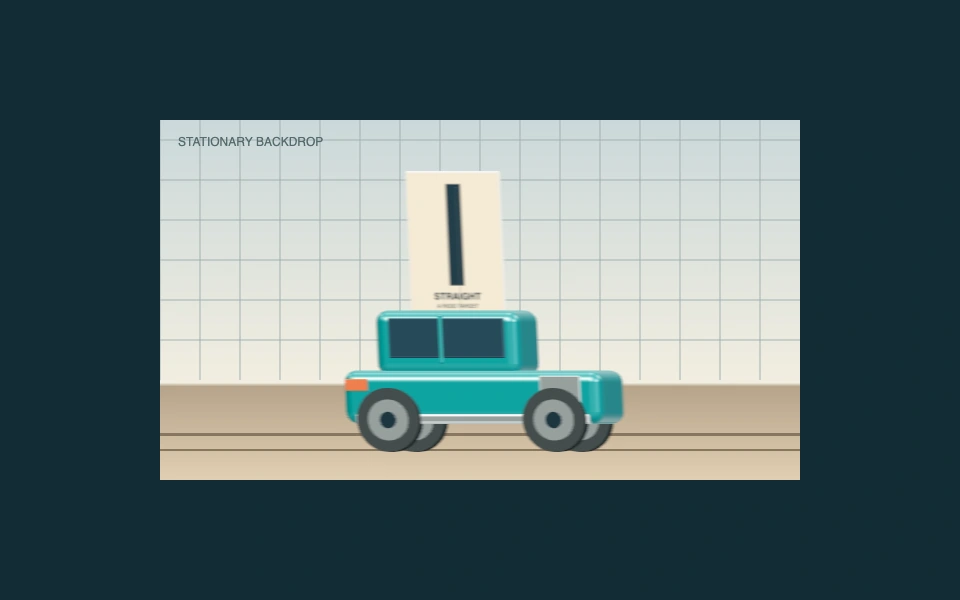
A literal writes one byte. A backward copy specifies a length and a distance into the receiver’s existing output. AB followed by copy 6 from 2 back produces ABABABAB, because each new byte immediately becomes part of the history.
Turn instructions into bits
DEFLATE assigns bit codes to literals, lengths and distances. Our workshop emits a real, final fixed-Huffman block. Eight literal A/B bytes require 74 meaningful bits in this profile; two literals and the six-byte copy need 38.
Predict before compressing
PNG can store a reversible difference from a nearby corresponding channel. Sub uses the same channel in the previous pixel; Up uses the channel in the previous row. The receiver makes the same prediction and adds the residual back modulo 256.
Count the packaging too
A complete PNG needs a signature, dimensions and format data, compressed image data, checksums and an ending. Our profile adds 70 container bytes around zlib, whose header and checksum add six more. One red pixel therefore uses 82 PNG bytes, despite having only three RGB bytes.
Decode the file you made
The lesson’s decoder parses the PNG’s actual chunks and DEFLATE bits, expands copies and reverses filters. It compares its reconstructed samples with the encoder input. An optional separate browser zlib decoder checks the scanlines independently.
Decide what can be lost
Rounding nearby channel values merges possible inputs. With 16 levels, both 0 and 8 become 0. The subsequent PNG preserves that rounded input exactly; it cannot decide which older value was discarded. Restore uses the original still retained by the editor.
Read a real codec’s evidence
The JPEG station uses actual files generated from the same canonical RGB samples. Its quantization tables are parsed from their marker bytes. Quality changes the encoder’s table scaling; it is not a universal percent of pixels or meaning retained.
Look closer at the science
The narrow PNG contract
This encoder produces RGB color type 2, eight bits per channel, no alpha, palette, interlace or animation. Chunks are IHDR, sRGB, one IDAT and IEND. Its decoder deliberately accepts this lesson profile, not arbitrary user files.
The bounded match search
At each position, an authored greedy search examines up to 64 recent positions with the same next three bytes, newest first. It takes the longest found match, keeping the nearest on ties. Valid lengths are 3–258 bytes; distances are 1–32,768 and cannot exceed available output.
Why overlapping copies work
For length greater than distance, the decoder repeatedly reads output[current length − distance]. A one-time slice of the initial history would be wrong: later copied bytes may refer to bytes created earlier in this same instruction.
Bits have two ordering rules
Non-Huffman fields and extra bits enter bytes least-significant-bit first. Huffman codes are emitted most-significant-bit first. A single final fixed block begins with three header bits, ends with symbol 256, and pads its final partial byte.
Prediction has no automatic size win
Each channel residual remains a byte, and each row gains one filter tag. The local suggestion score sums signed residual magnitudes. Later matches and bit costs can contradict that score: on this exact museum input, all-Sub makes a 55,896-byte PNG while the heuristic makes 55,999.
Relative losslessness
Decoding exactly reproduces the supplied RGB samples, not necessarily an earlier JPEG file, camera sensor data or all source metadata. A resized, color-converted or rounded input may already differ from an older reference before lossless coding begins.
Quantization and numeric error
For L levels, each channel maps to floor((x × (L − 1) + 127) / 255) × 255 / (L − 1). Here L is 256, 16 or 4. A pixel counts as changed if any channel differs; mean squared error averages squared differences over stored RGB channels. It is not a measure of beauty or scientific acceptability.
What common JPEG changes
The evidence uses a common DCT-based JPEG process with 8 × 8 component blocks, coefficient quantization and entropy coding. Its fixed 4:4:4 setting removes chroma subsampling as a changed variable. The quantization grid indexes spatial-frequency coefficients, not image pixels.
Quality 100 is not the lossless mode
The selected libjpeg-turbo version sets quantization entries to one at Q100. Its actual decoded file still differs from the input because that is not the same as reversing every conversion, transform and rounding operation. T.81 separately defines a predictive lossless JPEG process.
Not every input can shrink
There are eight distinct three-bit strings but only seven strings shorter than three bits, including the empty string. A reversible scheme cannot give every input a unique shorter representation. This limited encoder can expand inputs; it does not switch to stored blocks to bound expansion.
Try it yourself: Give a friend the instructions
Supplies
- Paper
- A pencil
- Two colors or two line styles
- A partner, if useful
- Rebuild a covered strip
Write ABABABAB. On another sheet write literal A, literal B, copy 6 from distance 2. Cover the original and rebuild one symbol at a time using only those instructions.
- Count the actual bits
Use the worksheet’s fixed-code costs: header 3; literals 8 + 8; length 7; distance 5; ending 7. Compare 38 useful bits with 74 bits for eight literals. Paper word lengths are not the compressed byte count.
- Make an irreversible choice
Write 0 and 8, then round both to 0 under the 16-level rule. Give only the rounded result to a partner. Several originals fit; a plausible guess is not exact recovery.
- Open a real lesson file
Optionally download the lesson PNG and record. Reopen the file locally, and read the exact decoder comparison. The visual match is useful, but the numeric check specifies precisely which input was recovered.
What does the receiver need to reconstruct a backward copy, and what information is unavailable after rounding?
Original paper/byte activity based on the documented grammar. It is not a measured classroom-effect study. No account, personal photo upload, external file import or software installation is needed.
Check your understanding
The decoder has already produced AB. Its next instruction is “copy 6 bytes from 2 bytes back.” What appears?
- ABABABAB.
- Only ABAB, because just two bytes were available at the start.
- Six random bytes.
Answer and explanation
ABABABAB. Correct. Each copied byte joins the history, so this valid overlapping copy continues the pattern.
A PNG Sub predictor stores 9 after the corresponding previous channel was 250. What is reconstructed?
- 255, because values are clamped.
- 3, because (250+9) mod 256 = 3.
- 9, because prediction deleted the original.
Answer and explanation
3, because (250+9) mod 256 = 3. Correct. The reversible calculation restores the original channel value.
A file shrank, and its decoder returns every encoder-input byte exactly. Which statement follows?
- This compression is lossless relative to those input bytes.
- It must preserve the original camera file, including all metadata.
- It must be encrypted.
Answer and explanation
This compression is lossless relative to those input bytes. Correct. A separate earlier edit may still have changed an older original.
You round the colors, then save with the lesson's PNG encoder. Why can the saved picture differ from the unrounded original?
- PNG has secretly switched to JPEG.
- The rounding changed the input before lossless encoding.
- A smaller file must always contain damaged pixels.
Answer and explanation
The rounding changed the input before lossless encoding. Correct. The PNG decoder faithfully returns that rounded input.
Why does the one-pixel example contain 82 PNG bytes even though its RGB data is only 3 bytes?
- The decoder needs 79 hidden original pictures.
- The computer cannot store a single red pixel.
- Filters, coding, wrappers, chunks, and checksums add overhead.
Answer and explanation
Filters, coding, wrappers, chunks, and checksums add overhead. Correct. This tiny case grows rather than shrinking.
The “Suggest filters” heuristic found smaller residual scores, but its final PNG is larger. Is that necessarily a bug?
- No. A local score does not guarantee the best later match and bit costs.
- Yes; PNG requires automatic filters to be optimal.
- Yes; smaller numeric values always occupy fewer than eight bits before compression.
Answer and explanation
No. A local score does not guarantee the best later match and bit costs. Correct. Our actual image supplies this counterexample.
The reference JPEG's quality is 100. Can you assume the decoded RGB array is identical to its input?
- Yes; 100 means 100 percent of original pixels are retained.
- No. The actual reference file has small nonzero differences.
- No JPEG-related format can ever support lossless coding.
Answer and explanation
No. The actual reference file has small nonzero differences. Correct. A table of ones is not the same process as a separately defined lossless JPEG mode.
You have only a rounded image, and several original values could have produced one of its pixels. What can an “enhance” tool establish?
- The exact original must be inside the compressed bytes somewhere.
- A convincing guess must be the historical original.
- It may create a plausible reconstruction, but cannot uniquely identify the discarded value from this output alone.
Answer and explanation
It may create a plausible reconstruction, but cannot uniquely identify the discarded value from this output alone. Correct. Additional evidence or the retained original would be needed.
Sources and model limits
- The PNG encoder is a transparent teaching subset, not a general optimizer or arbitrary-file decoder.
- No dynamic or stored DEFLATE blocks, lazy match selection or advanced optimization are implemented.
- The actual museum RGB baseline is fixed after resizing and color preparation; that preparation is not lossless relative to the original source JPEG.
- Color rounding is separate from PNG prediction and separate from JPEG coefficient quantization.
- Decoded equality is relative to the encoder input. Earlier metadata, resolution or color distinctions may already be absent.
- A heuristic is allowed to lose; smaller residual scores do not prove a smaller whole file.
- A hash, checksum, compressed stream and encrypted message serve different purposes.
- Nearest-neighbor magnification shows the existing pixel grid; it does not create compression damage.
- JPEG error metrics use the pinned research decoder; browser reconstruction can differ slightly.
- Quality is an encoder convention, not a percentage of retained pixels or human satisfaction.
- The editor keeps an original for Restore. The PNG does not secretly contain that original.
- No personal image upload, private filename or content hash is sent to analytics.
PNG filtering and file structure
Normative RGB sample layout, filters, chunks, CRC and zlib use. The workshop uses a specified subset, not all PNG features or a prescribed optimal encoder.
W3C · PNG Third EditionActual literal/length/distance codes
Sections 3.1 and 3.2 define bit order, overlapping copies, fixed codes and length/distance limits. Search heuristics are separately authored.
RFC 1951 · DEFLATEThe zlib wrapper and checksum
Header and Adler-32 surround raw DEFLATE. The selected 78 01 header is not a promise of another library’s exact compression-level behavior.
RFC 1950 · zlibJPEG processes and coefficient tables
Common DCT-based processes and the separately defined predictive lossless process. Published standard figures are not reused as licensed artwork.
ITU-T T.81 · original standardExact quality-to-table implementation
The pinned encoder’s quality scaling. Reference files use Pillow 12.1.1, libjpeg-turbo 3.1.3, 4:4:4, optimize false and progressive false.
libjpeg-turbo 3.1.3 · source codeIndependent browser decompression
DecompressionStream with deflate means zlib-wrapped DEFLATE. This is an independent available browser operation, not a promise of our encoder’s choices.
WHATWG · Compression StandardActual public-domain source image
Vincent van Gogh, Wheat Field with Cypresses, 1889, accession 1993.132. Purchase, The Annenberg Foundation Gift, 1993. Public-domain image, CC0 Open Access; exact preparation and hashes are preserved.
The Metropolitan Museum of Art · object 436535Museum image reuse
CC0 policy for public-domain collection images. Artist, museum and preparation credits are retained; no endorsement is implied.
The Met · Open Access policyIndependent subject review is pending.
Read the sources and model assumptions